By: Parker Hirsch, PT, DPT, FAS
One of the most common concerns I hear from patients is, “Don’t I need to get a scan first?”
Honestly, most of the time, you don’t.
Quick Facts to Know Before You Get a Scan
- You can start physical therapy without a referral or scan in most cases.
- Physical Therapists are trained to look at the whole body and determine the most likely cause of your pain/ contributing factors to your pain, with high accuracy.
- Scans can find things that aren’t actually causing your pain.
- Unnecessary imaging is a major source of medical waste in the U.S.
I’d say I’m pretty neutral when it comes to imaging. There are definitely times when it’s appropriate, but I see a lot of situations where it’s just not warranted. The truth is, a huge amount of medical waste in the U.S. comes from unnecessary tests. About $30 billion each year is estimated to be spent on unwarranted imaging.
So when someone says, “You don’t have X-ray vision,” I get it. But our evaluations are thorough, and there’s research showing physical therapists are just as accurate as orthopedic surgeons when diagnosing musculoskeletal conditions.
How Physical Therapists Evaluate Without Scans
When someone comes in, I start with a detailed conversation that gives me a lot of information like:
- When the pain started
- How long it has been there
- What makes it worse or better
- How it affects daily life
That first discussion sets the framework. From there, I start examining and diving further.
During an evaluation, I primarily look at:
- Joint movement: how things move and glide
- Tissue quality: how the muscles and soft tissue feel to the touch
- Range of motion: which motions are limited or painful
- Strength: how well the muscles support and stabilize
- Mobility: How do these joints move functionally
We also use screening tools backed by research, such as:
- Ottawa Ankle Rules
- Canadian C-Spine Rules
These act like mental checklists that help determine whether imaging might be necessary.
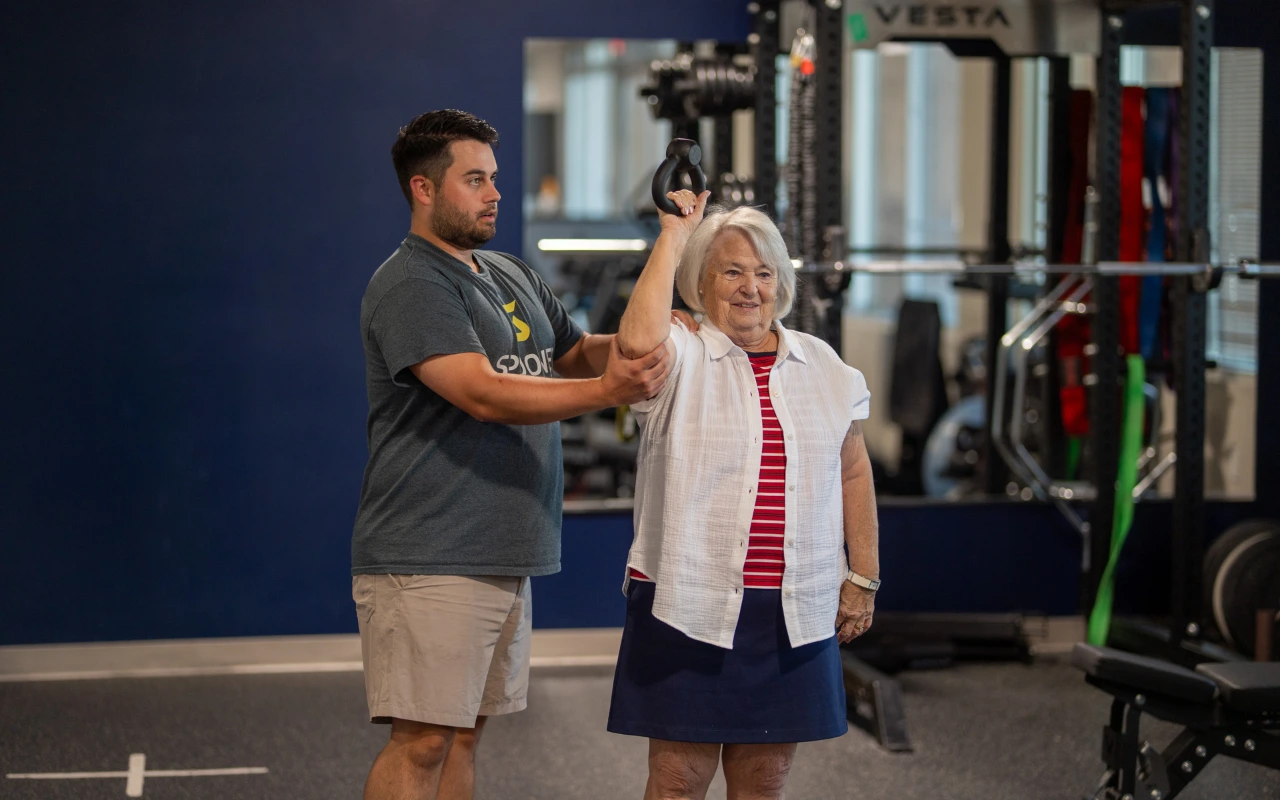
Once I have a good idea of what is happening, I move into special tests. These are specific movements or positions that help isolate certain tissues or structures. Some tests are meant to rule something in, while others rule it out.
Most of the time, the body tells me exactly what is happening just through movement, strength, and feel.
Why Scans Can Be Misleading
One of the biggest issues I see is that scans often scare people more than they help them. MRIs and X-rays are really good at finding things, and they almost always will.
In my five years of treating, I think I’ve only seen two scans that came back completely unremarkable. Most of the time, they find something, even if that finding isn’t the reason someone is in pain.
Studies have shown this again and again. For example, MRI research on pain-free shoulders found that about one-third of people had rotator cuff tears even though they felt fine. Another study found that 22% of people in the general population had tears without symptoms, increasing to 50% in people over 80.
So, having something show up on an image doesn’t always mean it’s the source of your pain. That’s why evaluation is so important. My job is to figure out what’s actually driving your pain, not just what shows up on a scan.
When a Scan Is Actually Helpful
There are times when imaging truly helps. If I’ve done a full evaluation and things still aren’t adding up, or if a patient isn’t progressing the way I would expect, that’s when I start to think an image might be warranted.
Sometimes the scan gives us another piece of the puzzle that helps explain what’s happening.
I had a patient who had already seen a doctor, but a fracture was missed early on. I recommended she get a scan, and that scan revealed the second fracture. That doesn’t happen often, but it shows that imaging has value when it’s used for the right reasons.
Most of the time, though, physical therapy is where we start, and it’s where we see progress. If the results of a scan change the plan of care, we adjust. That’s part of what we do as musculoskeletal experts.
Why Imaging One Spot Isn’t Enough
Even if a scan shows something like a disc issue, rotator cuff tear, or joint degeneration, that doesn’t mean it’s the only thing involved. The body works as a chain.
Someone might come in with shoulder pain, get imaging, and be told to “stretch your shoulder.” But often the real source is some where else. Maybe your neck is tight, your upper back isn’t moving well, your scapula isn’t stable, or your hips are compensating.
That’s where physical therapy makes a difference. We look at the entire movement system and how the entire chain affects things.
You Can See a Physical Therapist Without a Referral
A lot of people don’t realize that in Arizona, you can see a physical therapist without a referral. We call that direct access.
That means you can come straight to us. No waiting on approvals or appointments before you start getting help.
In Texas, direct access is also available for a limited time. Physical therapists can evaluate and treat you for a set period of time, up to 30 days, without a physician’s referral. After that, continued treatment may require a referral from a healthcare provider.
Every state has its own laws on direct access to physical therapy. If you live outside Arizona or Texas, it’s always a good idea to check your state’s rules through the American Physical Therapy Association (APTA) or your state’s licensing board.
If at any point I think you need a scan or another specialist involved, I’ll be the first to tell you. That’s part of my job.
Physical therapists are trained to evaluate, diagnose, and direct care. We are your musculoskeletal experts. I even tell my patients, “I’ll be the first to tell you if I’m not the right provider for you.”
The Bottom Line
- You don’t need an MRI or an X-ray before starting physical therapy
- Your body gives us the information we need. If imaging becomes necessary, we’ll let you know and help you get it.
- The best place to start is with movement. That’s what we specialize in, and that’s how healing begins.
Not sure if you need a scan? Start with movement!
Schedule an evaluation with a physical therapist and get answers without unnecessary imaging.
Sources
- American Physical Therapy Association. (2024). Direct access by state. APTA.
- Minagawa, H., Yamamoto, N., Abe, H., et al. (2013). Prevalence of symptomatic and asymptomatic rotator cuff tears in the general population. World Journal of Orthopedics, 4(3), 213–221.
- Moore, J. H., Goss, D. L., Baxter, R. E., et al. (2005). Clinical diagnostic accuracy and MRI of patients referred by physical therapists, orthopaedic surgeons, and nonorthopaedic providers. Journal of Orthopaedic & Sports Physical Therapy, 35(2), 67–71.
- Shrank, W. H., Rogstad, T. L., & Parekh, N. (2019). Waste in the U.S. health care system: Estimated costs and potential for savings. JAMA, 322(15), 1501–1509.
- Texas Board of Physical Therapy Examiners. (2025). Proposed amendment to 22 TAC §322.1 Provision of Services and Texas Register notice implementing HB 4099, expanding direct access to 30 calendar days.