By: Kaitlyn Keyser, PT, DPT, SCS, ATC, CSCS
In a physical therapy setting, weightlifting is how we help you get back to what you want to do.
Are you post-op and need to combat atrophy? Are you recovering from an injury and want to return to your sport? Do you need to get back to lifting 80 pounds overhead for your job? Are you an athlete already training with a performance or personal trainer and looking to make sure your body can keep up with your programming? Weightlifting is one tool in our arsenal that can help you slow down muscle atrophy, build strength, and return you to a high level of function.
We as physical and occupational therapists look at the entire body to see where your deficits could be keeping you from your goals. What are your movement patterns and demands? Are there any dysfunctions? At what speed do these movements need to occur? And are you controlled in your movement? We work to build you back up. But we don’t just want to build you up to where you were pre-injury or pre-op. We want to get you stronger and more efficient than you were before.
One of our goals is to help your body tolerate weights and weighted movements so you can perform your best, whether that’s in everyday life or on the field, platform, or court.
What injuries can occur with lifting?
Often in weightlifting, you might not have an extra set of eyes to watch your form. This can result in overuse injuries, poor movement patterns, or acute athletic injuries. Trauma can occur from a breakdown in form, while compensatory or poor movement patterns could result in overuse injuries. Pelvic floor issues can occur with improper breathing and core activation. Back and shoulder issues can occur if you lift overhead incorrectly.
Traditional lifting also tends to be heavily sagittal plane-based, meaning a lot of flexion and extension work. Lifters often build real strength in that plane but struggle with rotation, side-to-side movements, and stability. For athletes who move in all planes, this gap can translate directly to performance limitations or injury risk.
Strict diets that some lifters follow, like before a bodybuilding show or during an athletic cutting phase, deplete the body of its essential energy stores. If you don’t properly fuel for your workout or don’t modify your volume and load to match your energy intake, that imbalance alone can lead to injury.
How can a physical therapist help me lift better?
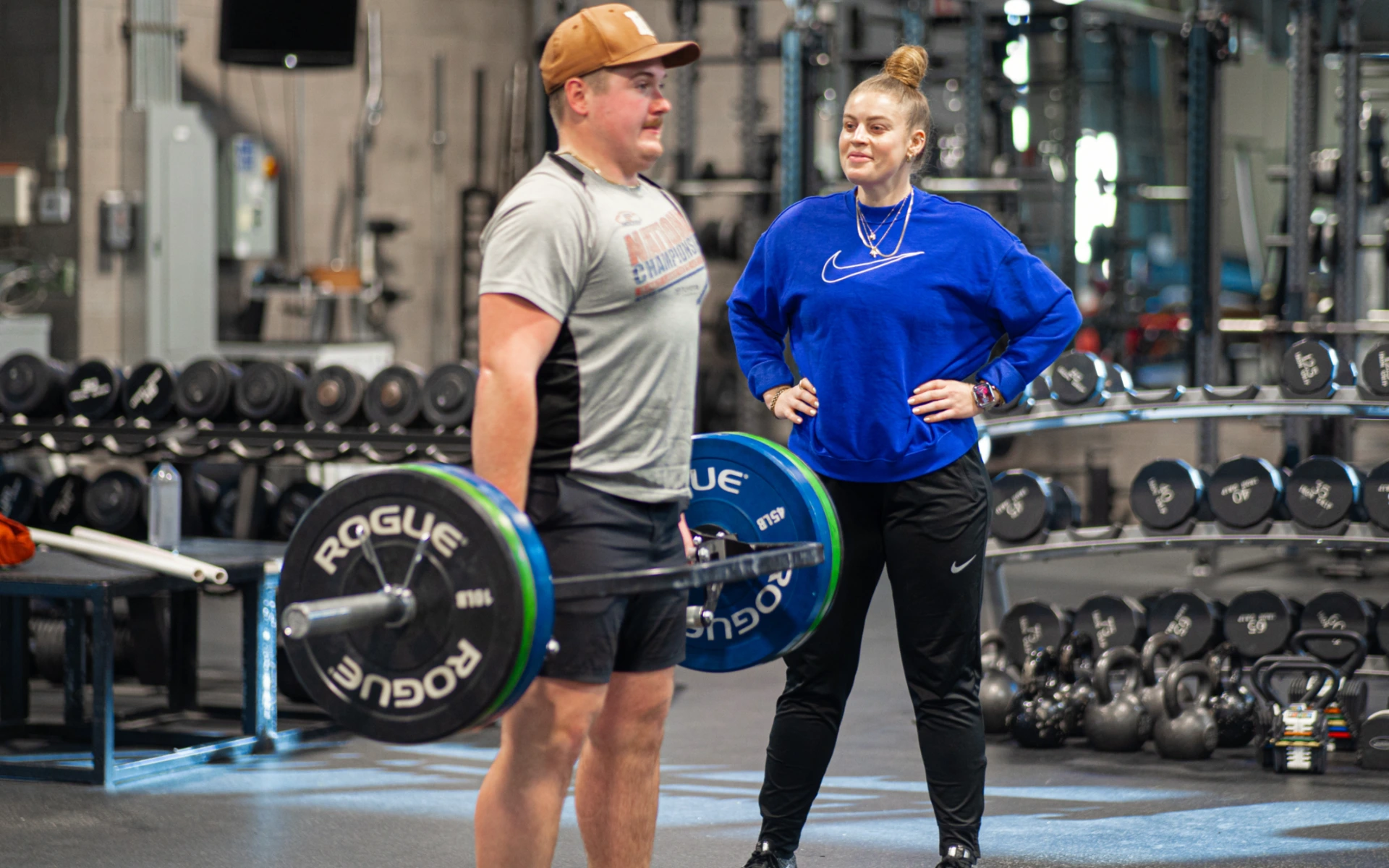
We work to educate you on lifting properly and safely. By watching your lifts, we can identify movement patterns that need to be retrained. There might be deficits you’re unaware of, and we can step in with specific cues to maximize your performance. A lot of the time, I give weightlifters pre- and post-training routines to either down-regulate their central nervous systems or to add in mobility-based work.
For athletes already training with a performance or personal trainer, working with a physical therapist at the same time can fill in gaps, allowing for the best multidisciplinary collaborative care. Your trainer is building your performance. We’re looking at the underlying movement quality, injury history, and physical limitations that could slow that progress or derail it altogether. Together, we can make sure your training load and volume, recovery, and movement patterns are all working in the same direction.
We also make sure everyone on your team is on the same page. If you’re working with a nutritionist, a coach, or a trainer, we coordinate so you can be as successful as possible. Maybe that means adjusting calories, or maybe we’ll suggest a de-load week. There are a lot of approaches, and the best outcomes usually come when the whole team is communicating.
Athletes, do you want to train smarter this summer? Join our performance training camps with performance and personal trainers and physical therapists working together to help you build strength, move better, and stay ready for the season. Learn more about Spooner Off-Season Performance Training Camps!