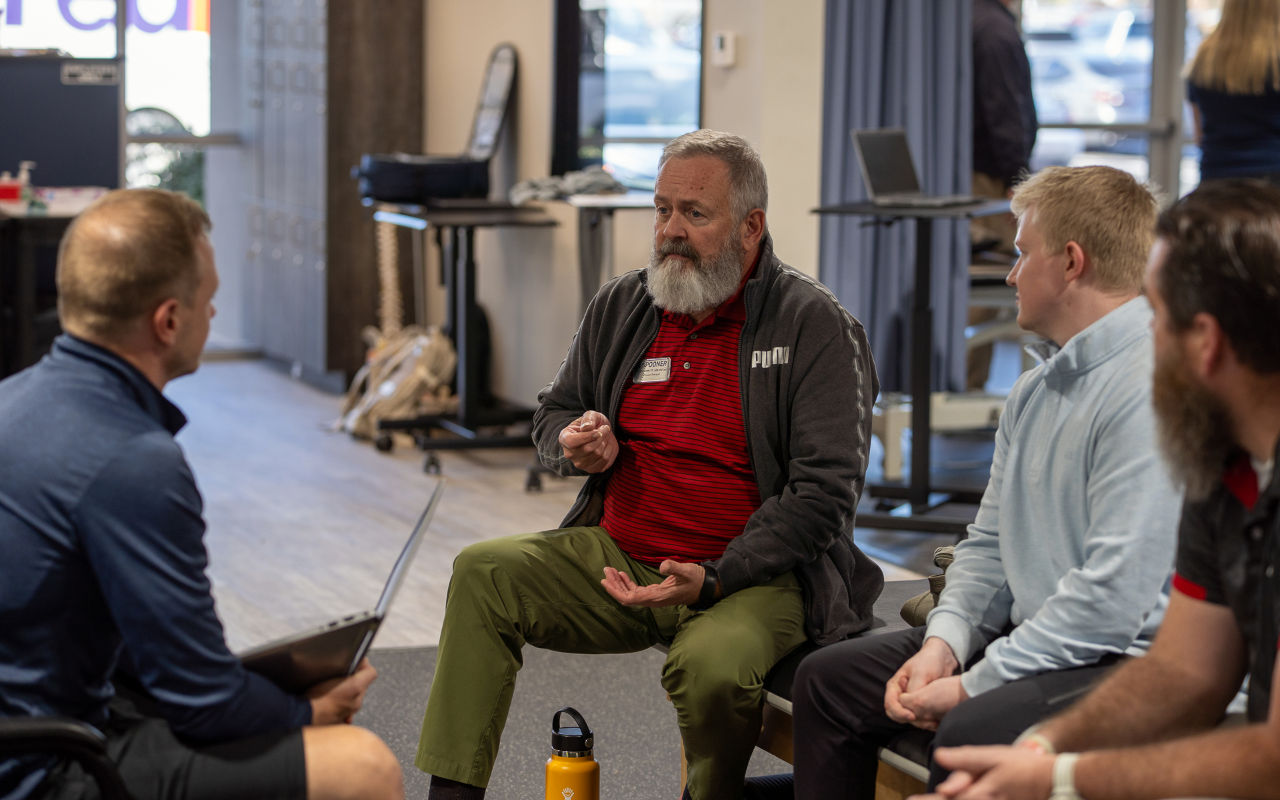
By: Shaun Koth, PT
If you could talk to yourself during your first year as a physical therapist—knowing what you know now—what would you say?
For Shaun Koth, PT, that question brings clarity around what truly matters in day-to-day clinical practice. After three decades of treating patients, he reflects on lessons shaped by repetition, relationships, and real-world problem solving. These are the insights that only time can teach—about clinical reasoning, communication, burnout, and building a career that lasts.
Q) What habits or routines help you reset mentally after a challenging session or long day?
Shaun:
After a tough session—whether it’s a complex case or a personality challenge—it helps to talk things through with another therapist if possible. Not to vent, but to get perspective. Peer feedback can help you understand what happened and how to approach it differently next time.
After a tough session—whether it’s a complex case or a personality challenge—it helps to talk Stepping away during lunch is also important. Getting outside, walking around, or simply leaving your desk for a bit gives you a mental reset. I try not to work through lunch so I can fully disconnect, even briefly.
After a tough session—whether it’s a complex case or a personality challenge—it helps to talk At the end of the day, going home to my family helps me reset. Spending time with my wife, kids, and dogs puts things back into perspective. I also try not to let one day bleed into the next. Each day is a fresh start—even when you’re seeing many of the same patients.
Q) What are some early signs of burnout you’ve noticed, and what steps do you take when they show up?
Shaun:
For me, burnout starts with negative thoughts—about myself, the profession, or patients. That’s something I want to address early before it becomes a pattern.
Another sign is realizing I really need time off and noticing it’s been a while since I’ve taken a personal day or long weekend. That’s usually a sign I’ve been pushing too hard for too long.
One benefit of physical therapy is that we don’t usually take emergencies home with us. But documentation can creep into evenings if you let it. I encourage younger therapists to get as much done at work as possible. Try not to work through lunch, and avoid taking work home when you can.
Documentation is part of patient care. Taking a few minutes less with a patient to finish your notes doesn’t shortchange them—it helps prevent work from piling up and weighing on you later. Building that habit early can make a big difference.
Q) If a new therapist shadowed you for a day, what would you hope they noticed about your work?
Shaun:
I’d want them to notice how I communicate with patients and why I ask certain questions. Some questions might seem out of place, but there’s always a reason behind them. I try to be direct with patients and encourage them to be direct with me so we’re aligned.
When students or younger therapists observe me, I’ll often ask why they think I asked a certain question. We recently had students from West-MEC’s PT tech program, and I did the same with them. I want them thinking clinically about communication and intent—not just techniques.
Q) How do you continue to challenge yourself clinically?
Shaun:
That’s become a little tougher over time, but I still learn a lot by listening to colleagues—how they talk with patients and connect conversations to treatment. Our clinic environment makes it easy to pick up ideas just by being present.
Recently, I’ve spent time diving into Gary Gray’s work through his online courses, particularly around Functional Applied Science. I’m not pursuing long certification programs at this stage, but I still see a lot of value in continuing education.
Some of the best learning also comes from watching what colleagues do and thinking about how to apply those ideas to other patients.
Q: Any additional advice on managing your time while taking care of yourself?
Shaun:
Over time, a lot of it becomes automatic—but it helps to plan for small gaps in the schedule. If a patient cancels and you suddenly have ten minutes, it’s useful to already know how you’ll use that time.
That might mean catching up on notes, making calls, building exercise templates, or knocking out quick clinic tasks. Having a mental or written list helps reduce overwhelm, especially in a busy clinic where you might see 15–20 patients a day.
Working in a PT clinic is a lot like working in a restaurant—it can go from calm to nonstop in minutes, then suddenly slow down again. Having a plan for those quieter moments makes the whole day feel more manageable.
Q: Final question—what advice would you give yourself in your first year, mid-career, and now?
Shaun:
In my first year, I’d tell myself not to take a job just for the money. I did that early on, and it wasn’t the right fit.
Mid-career, I would’ve encouraged myself to specialize more and pursue certifications. I don’t have specialty certifications, and that could have been beneficial.
I also wish I had found Spooner earlier in my career. I spent about ten years at another clinic that was fine—but working here has been a really positive experience.
Another piece of advice is to pay attention to the patients who recharge your batteries. Often, it’s the ones you don’t expect much from at first who end up surprising you the most. Those moments help prevent burnout and remind you why you chose this profession.
Let yourself be surprised. Avoid becoming cynical. Those moments are what make a long career sustainable.
Learn With Support
We learn best with guidance from those who’ve walked the path before us. At Spooner, mentorship is built into the culture—pairing newer clinicians with experienced therapists who are invested in growth, clinical reasoning, and long-term development. Learning doesn’t stop after graduation, and neither does support.
Interested in doing a rotation with Spooner or joining our team? Check out the Student Experience at Spooner or see open opportunities on the Spooner Careers page.