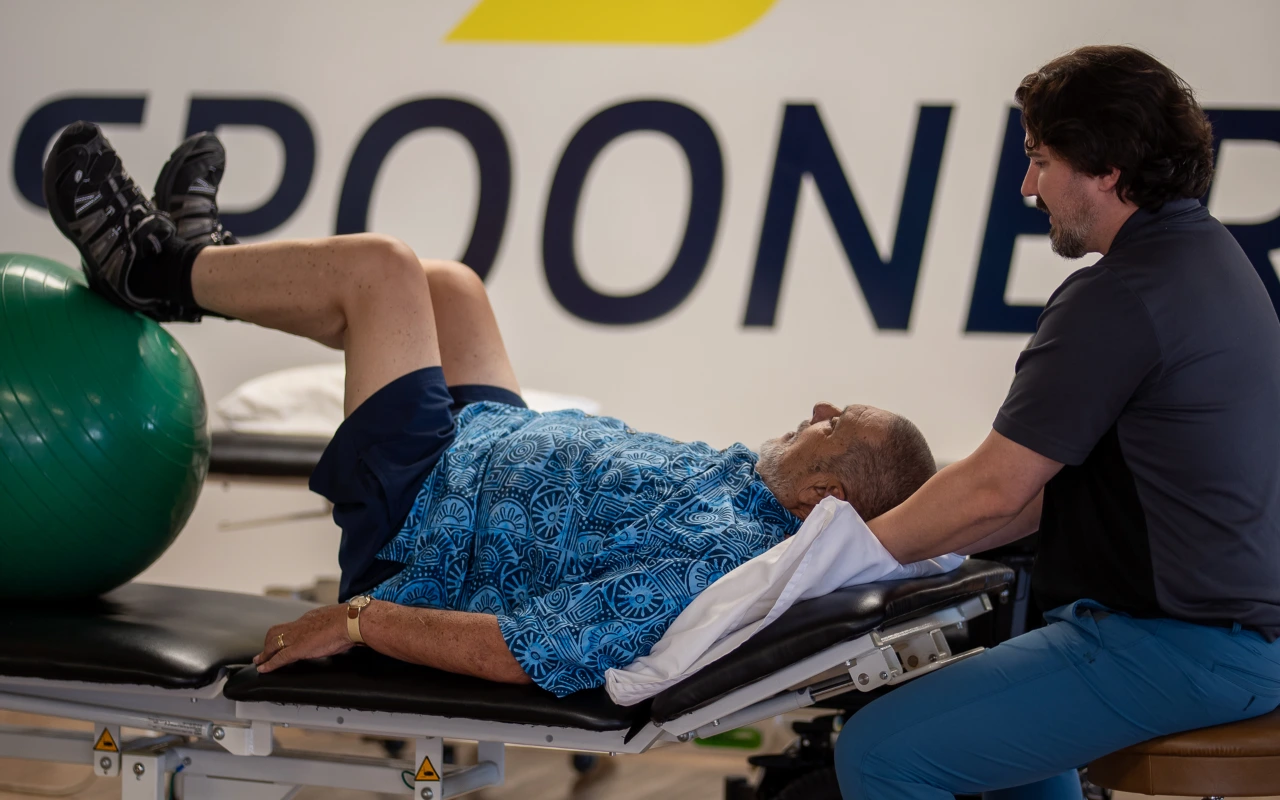
By: Joey Weber, PT, DPT, Spooner Phoenix Clinic Director
Spinal stenosis is a term that can sound intimidating, but it’s actually a fairly common condition that we treat frequently in our clinics. So what are the warning signs that someone might be dealing with spinal stenosis?
Common symptoms include shooting pain, numbness, or a feeling of heaviness in the legs (and sometimes the arms) that tends to worsen with walking or prolonged standing. One of the most noticeable signs is realizing that you can’t walk as far as you used to without needing to sit down and rest.
Spinal stenosis typically develops gradually over time. While physical therapy does not change the structure of the spine, it can significantly help manage symptoms by improving how the body moves, supports the spine, and distributes load. By addressing mobility, strength, and movement patterns, physical therapy can help reduce pressure on irritated nerves and allow people to move more comfortably and confidently.
What spinal stenosis actually means
Spinal stenosis means there is less space inside the spine than there used to be. I often describe it like a pipe that slowly becomes narrower on the inside. As that space narrows, there is less room for the structures that pass through it.
In the spine, those structures are nerves.
The narrowing itself is not always the problem. Symptoms typically occur when that reduced space places pressure on the nerves. That pressure can lead to pain, tingling, heaviness, or weakness in the legs or arms, depending on where the narrowing occurs.
How it usually develops
For most people, spinal stenosis develops gradually over time rather than appearing suddenly. It is often the result of normal age-related changes in the spine.
Discs can change shape or bulge. The small joints in the spine can become arthritic. Ligaments may thicken. Over time, these changes can take up more space within the spinal canal.
Factors such as posture, repetitive physical stress, body weight, and long-term movement habits can also contribute.
Some people are born with naturally smaller spinal canals, but that is less common. Most cases develop as part of the aging process, similar to arthritis. It is common, gradual, and can look different from person to person.
What people usually feel
Many people are surprised that their main symptoms are not in their back, but in their legs.
They often describe pain that travels into the thigh, calf, or sometimes the buttock. It may feel sharp and burning, or deep and achy. Standing and walking typically make the symptoms worse, while sitting or bending forward often brings relief.
Some people also experience lower back pain, numbness, or tingling in the legs or feet. As symptoms progress, walking may become more difficult, and the legs can begin to feel heavy, weak, or less steady.
These symptoms are usually signs that the nerves in the spine are becoming compressed or irritated.
Get Help Sooner Than Later
I usually tell people that if their symptoms are starting to change how they live their day, that is reason enough to come in.
That might mean avoiding walks, standing less, sitting more often, or planning the day around pain.
Early care helps, not because spinal stenosis is dangerous, but because when pain sticks around people naturally move less, get weaker and stiffer, and lose confidence in their movement. That cycle can make symptoms feel worse over time, and physical therapy helps interrupt it.
How physical therapy helps
Many people assume spinal stenosis automatically leads to surgery. For a lot of people, that is not true.
There is strong research showing that physical therapy can improve symptoms and function, especially for stenosis in the low back.
In the clinic, we focus on two main things.
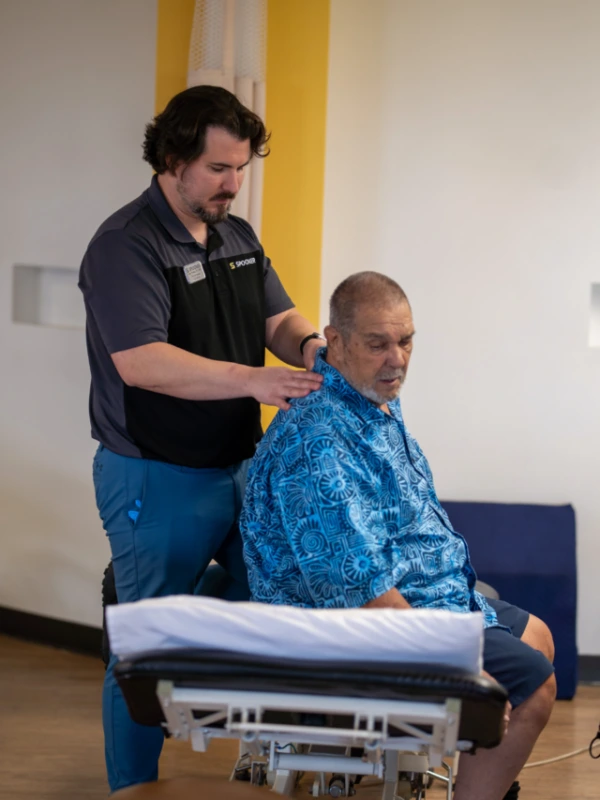
First, we work on calming current symptoms. We address movement, joint mobility, posture, and strength. We work to improve circulation to irritated areas and reduce unnecessary stress on parts of the spine that are already crowded. Over time, this often reduces inflammation and nerve sensitivity.
Second, we focus on long-term management. Spinal stenosis is usually something people manage, not something that disappears. We teach positions that reduce symptoms, build strength where support is needed, and adjust how people move through daily life so the spine is not under constant strain.
The goal is for someone to understand their own body well enough to keep symptoms under control.
Even if your scan comes up with Spinal Stenosis, it may not be as serious as you think!
This part surprises many people.
Spinal stenosis shows up on scans very often, especially as people get older. I see it frequently in adults over 70, even in people who do not have much pain.
Research shows that many people have spinal stenosis on MRI and never know it.
That means a scan alone does not explain how someone feels, and it does not automatically mean something serious is wrong. Listen to your bodies cues first, and if you are feeling unsure, you are always welcome to come into the clinic for a complimentary movement screen.
What matters more is what you can do, how you move, and how your nerves respond to activity. That is what physical therapy focuses on.
You do not have to manage it by yourself
Spinal stenosis is often best handled as a team.
A physician helps manage the medical side. A physical therapist works on movement, strength, and daily function. Together, care can be adjusted as you progress.
This is something we see often in the clinic. Many people first hear the term after an X-ray or MRI and feel worried about what it means. Most are surprised to learn how common it is, how slowly it usually develops, and how manageable it often is.
It does not mean your independence is ending.
If walking is getting harder, standing brings on leg pain, or you feel less steady than you used to, you do not have to push through it or figure it out alone. Schedule your free movement screen at a Spooner clinic today to get support today.