By: Tyler Gulla, PT, DPT
Youth athletes now work a 9–5. The commitment level is there, even if the paycheck isn’t.
The landscape of youth sports has grown far beyond local rec leagues. Now it includes travel ball, private instruction, intense training schedules, showcases, and even sport-specific academies. For baseball athletes especially, the workload adds up fast.
So how do young athletes handle that kind of pressure, both physically and mentally? And how do parents advocate for their child’s health without feeling like they have to become an expert overnight?
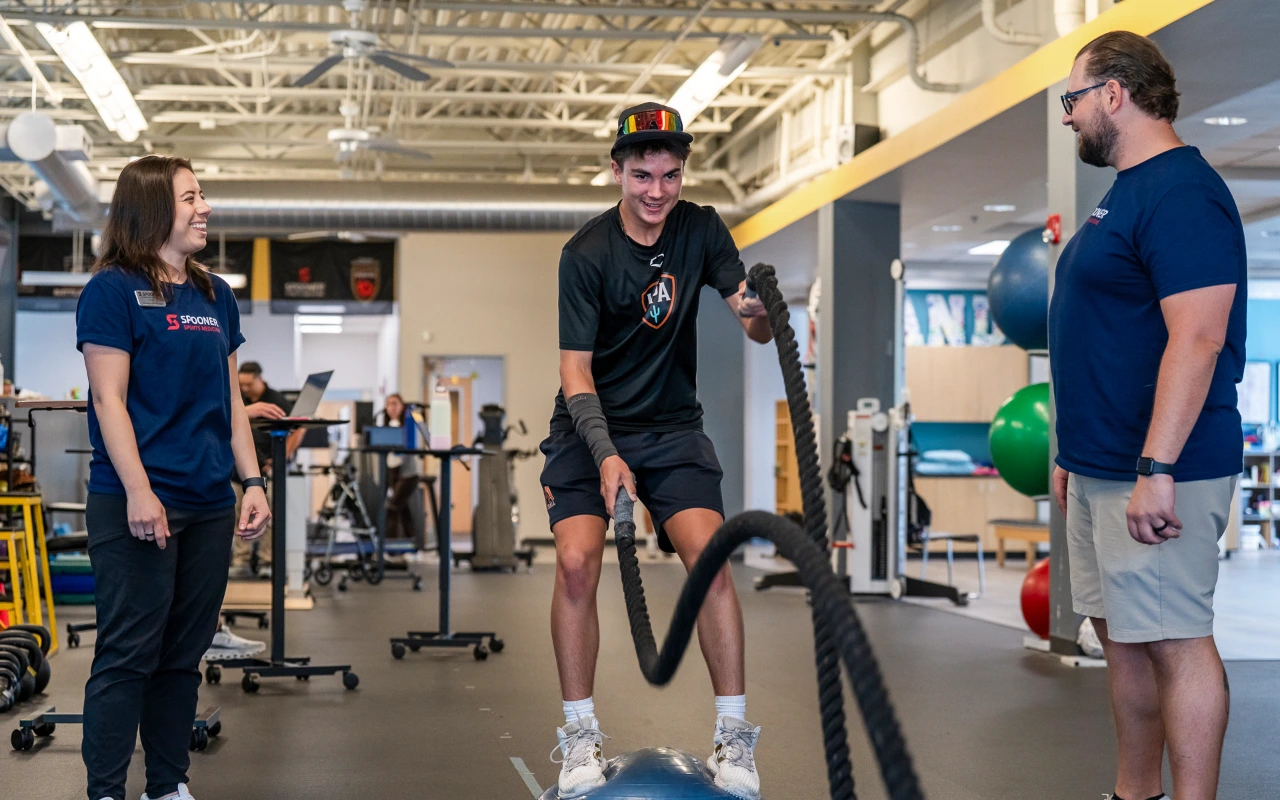
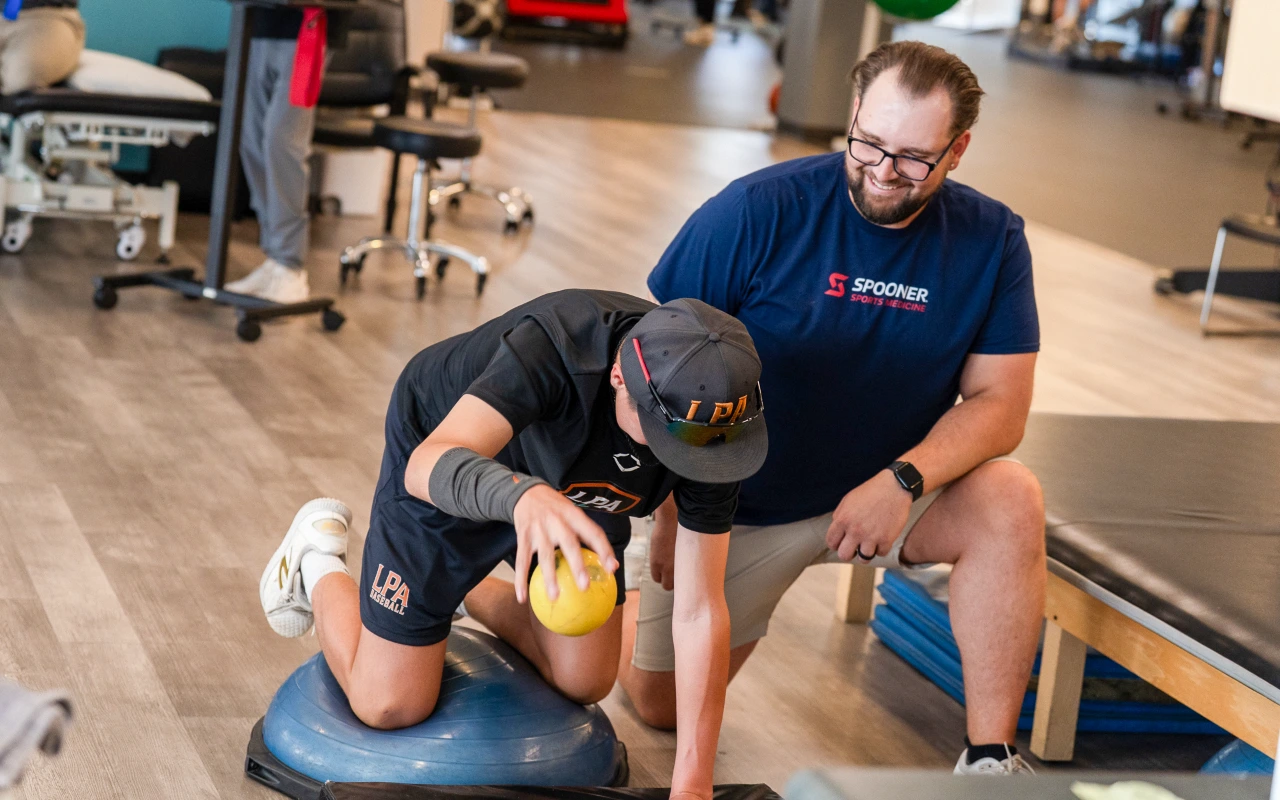
I’ve learned a lot about those questions through my work as a physical therapist at Spooner, where I collaborate with student athletes at Legendary Prep Academy, one of Phoenix’s premier youth baseball academies.
Legendary is doing a lot right when it comes to prioritizing athlete’s health and using Spooner as a resource. But the bigger point is this: the principles behind what they’re doing are things any parent of a youth athlete with a demanding schedule can use too.
What the Load of a Youth Baseball Athlete Really Looks Like
For the athletes I work with, in-season training can run most of the year. Between strength work, speed training, skill work, and throwing, there is usually something going on almost every day.
Most of these athletes also hit and pitch, because many of them want to go to college as a two-way player and specialize later.
For pitchers specifically, the volume can get high quickly. Between bullpens, games, and additional throwing, it can add up faster than most people realize, and it has to be managed carefully.
This is one of the biggest things I want parents to understand: pitch counts and bullpen frequency both matter. You can’t let these athletes throw every day and expect their arms to hold up.
When this is managed well, they get stronger overall and their arms tend to hold up better throughout a long season. At Legendary, this is something they have been intentional about from the start. It is a good example of what it looks like when a program is paying attention to the athlete’s body, not just the athlete’s performance.
This is also where parental advocacy matters. A lot of kids don’t feel the effects of overload right away, so it is important to be proactive. If your athlete is throwing for multiple teams or between games, lessons, and bullpens, it is worth tracking that volume yourself and communicating with coaches when needed.
What parents should watch for:
- Throwing multiple days in a row with little recovery
- Bullpens stacked on top of games
- Overlapping team schedules
- Lingering soreness that keeps showing up
- Fatigue during busy school weeks or stressful stretches
The Injuries I See Most Often in Youth Baseball Players
The most common issue I see in youth baseball athletes is elbow stress, including Little League elbow and medial elbow irritation (also known as golfer’s elbow).
When young athletes are throwing this much and the posterior chain and rotator cuff aren’t doing enough of the work, the elbow tends to pick up the slack.
That’s an important point for parents: arm pain is not always just an arm problem. It often reflects a bigger workload issue, a strength issue, a recovery issue, or a combination of all three.
The other thing that doesn’t get talked about enough is mental load.
One study that caught my attention found nearly double the injury risk during high academic stress weeks compared to lower stress weeks. Think about finals week, big exams, recruiting conversations, travel, and a full training schedule all happening at once. That is a lot for a 16- or 17-year-old to carry.
Mental load absolutely affects the body. It changes how athletes recover, how they handle fatigue, and how much stress they can tolerate, whether that stress is coming from baseball or the weight room.
A simple takeaway for parents
If your athlete seems unusually tired, sore, overwhelmed, or mentally drained, that may be a sign that something needs to be pulled back before it becomes an injury.
Recovery Is Part of the Schedule
If your athlete is playing year-round, their body needs year-round attention too.
Something that I emphasize to families is that recovery should not start only after pain begins. Movement assessments by a physical therapist can help catch issues before they turn into injuries.
That is one of the reasons Legendary has made this a priority by bringing Spooner in to work directly with their athletes. Not every program has that built in, but there are still ways to build that kind of support around your athlete.
How a physical therapist can help:
- Catch movement issues before they become injuries
- Build a personalized arm care or throwing plan based on goals and schedule
- Create a structured ramp-up plan before the season
- Provide hands-on treatment and recovery strategies to keep the body moving well
- Monitor throwing volume and help identify when adjustments need to be made
- Reduce mental load by giving both the athlete and parent a clear plan to follow
There are also accessible resources families can start with at home. One that I recommend often is the Advanced Thrower’s Ten, a free program developed by physical therapist Kevin Wilk at the Andrews Institute.
It targets the posterior chain and rotator cuff to help take load off the elbow. All you need is a resistance band and light dumbbells, and honestly even a can of soup can work in a pinch. It is simple, effective, and accessible for most families.
Why a Ramp-Up Period Matters
Coming back from time off is not as simple as picking the ball back up.
If your athlete has taken three months off, they need a structured throwing plan to reduce the risk of overload. That return has to match the timeline. Sometimes that means a four-week plan, sometimes eight, and sometimes twelve.
I use different ramp-up programs depending on the athlete, their schedule, and what they need to be ready for.
For example, I have worked with an athlete heading to pitch at the next level whose arm needed time off, but who also needed to be ready for fall ball. In collaboration, we built a twelve-week throwing program followed by a four-week pitching progression that had him ready by the end of October.
That is what it looks like when there is a plan behind it.
Taking time off matters. But the return matters too. If a player rests and then jumps right back into full throwing volume, the benefit of that rest disappears pretty quickly.
What Parents Can Do Right Now
Something I recommend to all my athletes is this: they should be taking about three months off from throwing each year.
That does not mean they should sit on the couch. This is the time for them to be kids and athletes.
Running, lifting, playing basketball, touch football, going on vacation, playing tag; that stuff still matters. These kids were all-around athletes before they became baseball players. That does not go away just because they have chosen to specialize.
Finding time for that break is the hard part.
Because the heaviest recruiting season often lands in the summer, this rest period may need to happen during fall ball or around the holidays. But parents also need to remember that athletes still need enough time to ramp back up safely before spring.
My main takeaway for parents is this: you are not supposed to know all of this.
It is not your job to build the throwing program or manage your kid’s arm care on your own. Your job is to be a good parent and get your kid around the right people who can take some of that load off you, so you can enjoy watching them play the game they love.
Quick Summary for Parents
Here is what that looks like:
- Make sure your athlete gets a real three-month break from throwing each year and leave enough time to build back up before spring.
- Ask who is helping with strength, recovery, and injury prevention, so you know your athlete has the right support around them.
- Remember that school stress and mental load affect the body too, especially during tough stretches like finals week.
- Think of physical therapy as something that can help your athlete stay ahead of problems, not just respond to them after an injury.
Remember, the best ability is availability. When your kid is hurt, they are not on the field.
Set Them Up for Success
These athletes love their sport, and they are putting in real work.
As a parent, your job is to make sure the right people are in your kid’s corner. Build that team early. Advocate for their body the same way you advocate for their game. When you do that, they are in a much better position to stay healthy, keep developing, and enjoy the sport for the long haul.
If you want to get ahead of overuse before it becomes an injury, schedule a complimentary assessment today!
References:
- Mann JB, Bryant KR, Johnstone B, Ivey PA, Sayers SP. Effect of Physical and Academic Stress on Illness and Injury in Division 1 College Football Players. J Strength Cond Res. 2016 Jan;30(1):20-5. doi: 10.1519/JSC.0000000000001055. PMID: 26049791. https://pubmed.ncbi.nlm.nih.gov/26049791/