By Jenna Salber, PT, DPT, CLT-UE
When going through breast cancer treatment, it can feel overwhelming to see multiple providers at once. A breast cancer care team may include providers such as your surgeon, your medical oncologist and radiation oncologist, your plastic surgeon, and other specialists. It can be hard to know where a physical therapist fits into all of that, or when the right time is to go see one.
Here’s how physical therapy fits into your breast cancer care team and what you can expect when you come see us.
When Should You See A Physical Therapist for Breast Cancer Treatment?
In a perfect world, I would prefer to see you at the beginning of your treatment so I can help you navigate everything that’s coming, from surgery to chemotherapy and radiation. But it is never too late to add a physical therapist to your team.
Some surgeons are very proactive and refer patients to us before surgery. Other patients don’t find us until they’re six or nine months into their journey. There’s no right or wrong time to come see a physical therapist , but the sooner you come in, the sooner we can help support you through your recovery.
Please note, if you come in early, regular visits may not start right away. Your first visit is a chance to establish care, talk about what’s coming, go over lymphedema prevention, and talk through how different reconstruction options may affect your recovery. Your consistent plan of care will start when it makes sense in your treatment.
What Does a Physical Therapist Help With During Breast Cancer Recovery?
My main goal as your physical therapist is your overall function. That means helping you move and feel like yourself again after surgery, chemotherapy, and radiation.
Other providers on your breast cancer care team have their own focus. Your medical oncologist is making sure you’re getting the right chemotherapy. Your radiation oncologist is focused on the dose of radiation needed to treat the area. Your surgeon is focused on removing the cancer, and your plastic surgeon is focused on reconstruction. As your physical therapist, my focus is how your body is moving throughout treatment and getting you back to your normal activities.
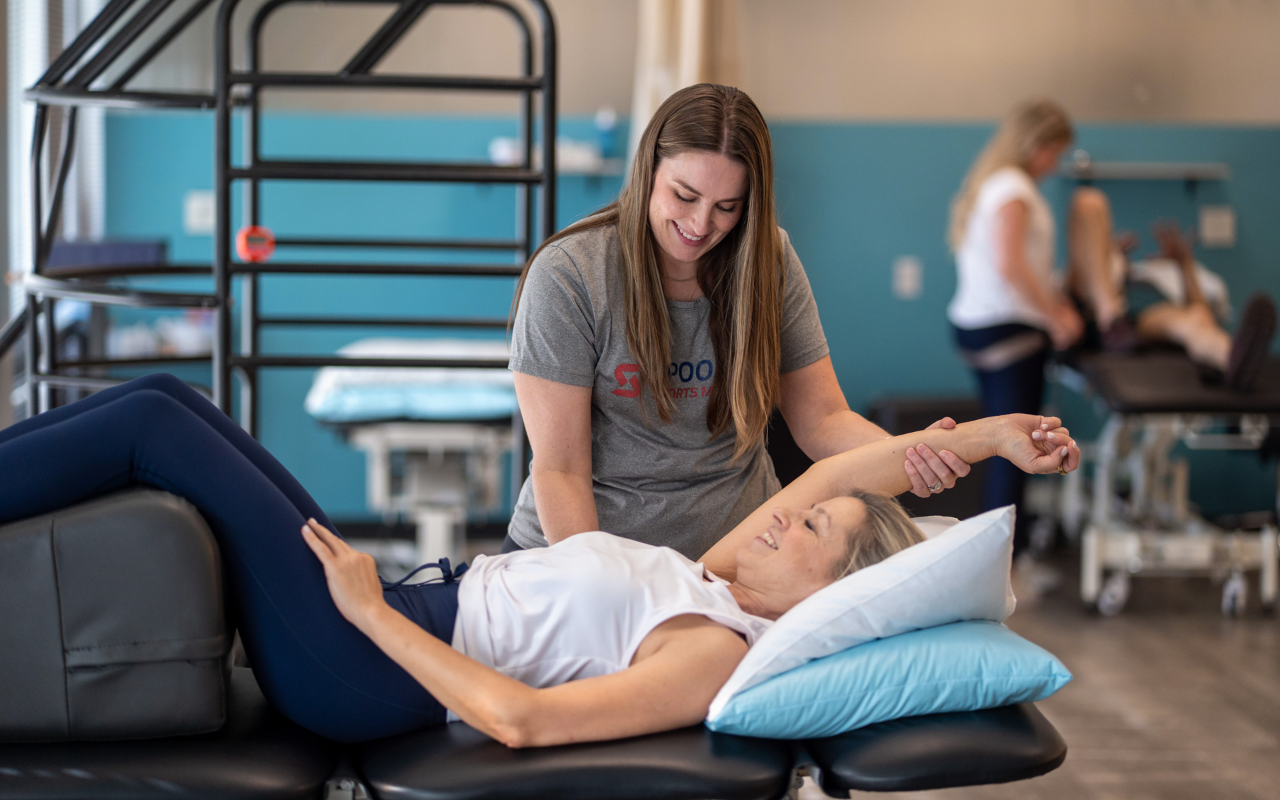
Physical therapy for breast health patients can help with stiffness, limited range of motion, strength, and lymphedema prevention and management. But I’d say the most important part of physical therapy for breast cancer recovery is getting you back to your normal activities.
A lot of people expect to live with limitations after treatment, and you don’t have to. Learn more about the physical symptoms you may experience during and after treatment in:
Your physical therapist is also a resource for you throughout your care. If you have questions about how you’re moving, swelling, your scars, or whether something you’re feeling is normal, you can bring them to us.
How Does Your Physical Therapist Work With Your Doctors?
You may be referred to us by your surgeon or your oncologist, or you may find us on your own. No matter how you find your way to our clinic, our job is to gather information about your team so we can communicate with everyone, not just the doctor who sent you to us.
After surgery, your surgeon may limit how much you can move your arm or shoulder. Every surgeon is a little different with restrictions post-operatively. We make sure we know exactly what your surgeon wants, so we’re following those instructions throughout your treatment.
If we see something that could be a red flag while you’re in the clinic, like a possible infection, we contact your doctor’s office right away. We want to make sure your doctor is aware so you don’t have any significant setbacks and your whole breast cancer care team is on the same page.
Ask Your Care Team for a Physical Therapy Referral Early
You can ask for a physical therapy referral early in your treatment, and in my experience, doctors are happy to give one. Most of the doctors on your care team are glad to send you to someone who can help with regaining your function.
They may not know there’s a specialty physical therapist close by who can help, or they may not have referred patients to physical therapy before. That’s why it’s important to advocate for yourself early and ask.
Whether you need a referral for coverage depends on your insurance. Check with your insurance company or contact us to help with verifying what your insurance requires.
What Should You Expect at Your First Breast Oncology Rehabilitation Visit?
On your first visit, I’ll get a really good idea of who you are, what’s normal for you, and where you are on your journey. Are you doing chemotherapy or radiation? Have you had surgery? Do you have another surgery coming up?
Then I’ll take some baseline measurements. Depending on where you are in treatment, those can include
- Range of motion, if it’s allowed after your surgery
- A look at any incisions you might have
- The quality of your skin, if you’re coming to us after radiation
- Measurements of both arms, so we have a baseline in case you have any issues with lymphedema in the future
- Strength and balance assessment if appropriate
From there, we’ll talk about your goals, where you are now compared to where your goals need you to be, and how we’re going to get you from point A to point B.
I also usually start my patients on a few things they can take home that day, like
- Scar massage you can do on your own
- Desensitization techniques
- Exercises and stretches
- Postural awareness while sitting at your work desk
That way you don’t leave with just an intake. You have something to work on before your next appointment.
How Long Will You Need Physical Therapy During and After Breast Cancer Treatment?
How long you see a physical therapist varies based on where you are in your treatment, your symptoms, and your goals.
For example, if you’re going through chemotherapy, your frequency of visits in the clinic will vary based on your side effects. If you’re recently out of surgery, I might see you twice a week for six to eight weeks, then once a week for another four to six weeks as you work toward your remaining functional goals.
Your plan of care isn’t set in stone. We’re constantly adjusting it based on how you’re doing. We can adjust your appointment schedule to work around your symptoms.
How Does the Spooner Breast Cancer Rehabilitation Team Work Together to Give You Better Care?
I’ve been a breast cancer rehabilitation therapist at Spooner for more than 10 years. Many physical therapy practices don’t have a therapist who specializes in breast cancer rehabilitation, but we’re lucky to have several at Spooner. That gives us a collaborative resource group. If I personally don’t know something, I have a network of therapists I can go to who may have had the same experience or know the doctors you’re seeing.
We Can Help Connect You to Other Specialists
The breast cancer journey can be overwhelming, and you may not know anyone who has had the same treatments. One of the most important things I can tell you as a professional who sees women in recovery daily is that what you’re feeling is not out of the realm of normal. It’s not uncommon, and there is rationale for why you’re feeling this way.
If you’re where you should be, I’ll tell you. If you’re not, I’ll tell you our plan to get you where we want you to be long term.
I also want to make sure you have everyone you need on your team. If you’re struggling with the emotional side of things and no one has suggested you see someone, I’ll always recommend seeing a mental health professional. This is heavy stuff, and you’re going through a lot. It’s important to have space and time for you to be able to talk about and process the things you are going through.
If you’re having trouble eating or keeping weight on during chemo or after surgery, I will also suggest meeting with a nutritionist to help.
I know this information can feel like a lot. But we help people through this every day, and as your physical therapist, I’m here to make sure you have everything you need for your recovery.