By Ernie Atkins, CSCS, Head Strength and Conditioning Coach at the Spooner Sports Institute
When people think about strength and conditioning, they usually picture football players, baseball pitchers, or track sprinters. Swimming? It doesn’t always come up in that conversation. And that’s honestly one of the biggest missed opportunities I see at the youth and high school level.
Here’s the thing, every Division I swim program in the country has a dedicated strength and conditioning coach working with those athletes year-round. So if you want your swimmer to compete at that level, they need to be training like it well before they step into the doors at college.
I’ve worked with swimmers from age 13 all the way through college and the Olympic level. Out of the swimmers I’ve trained here, 100% of them are now competing as full-ride Division I athletes. Most of them started with me in middle school. That doesn’t happen by accident.
Swimming Is More Athletic Than People Think
One of the most common things I hear from parents is, “They have practice every day, isn’t that enough?” I understand why they think that. But lap after lap in the pool doesn’t build the kind of strength and power that separates a good swimmer from a great one.
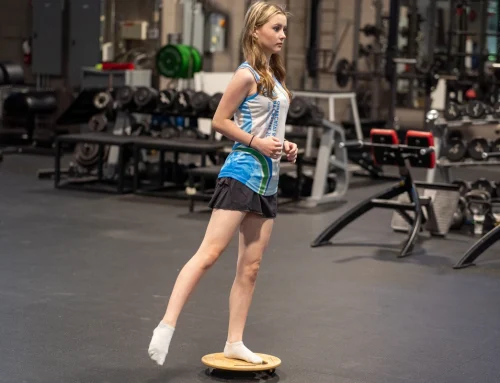
Swimming is a highly rotational sport. Whether an athlete is swimming freestyle, butterfly, backstroke, or the IM, they are constantly rotating through their hips and trunk. That’s actually a lot more in common with baseball, golf, and volleyball than most people realize. The demands on the shoulder, scapula, and thoracic spine are significant, and if those areas aren’t being trained properly out of the pool, performance suffers, and injury risk goes up.
Peak Power: What It Means and Why It Matters
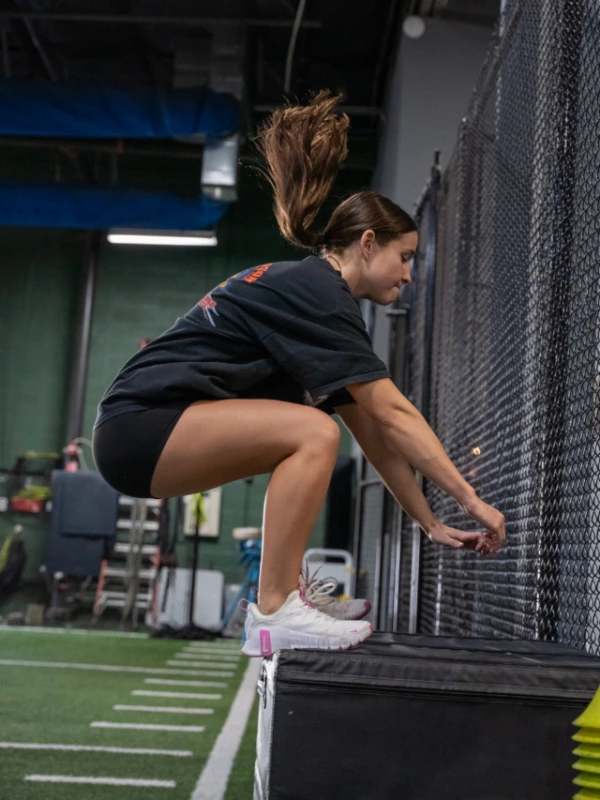
Peak power in swimming isn’t just about how strong an athlete is. It’s about how powerful they are relative to their body weight. A swimmer can’t just be big and strong. They have to be explosive in a way that makes sense for how much they weigh, because the water is working against them constantly.
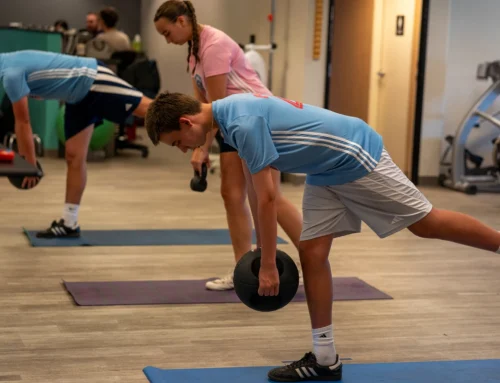
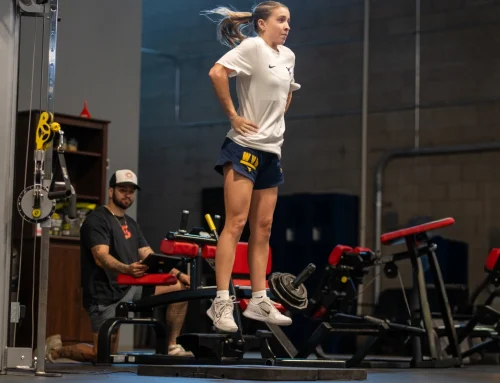
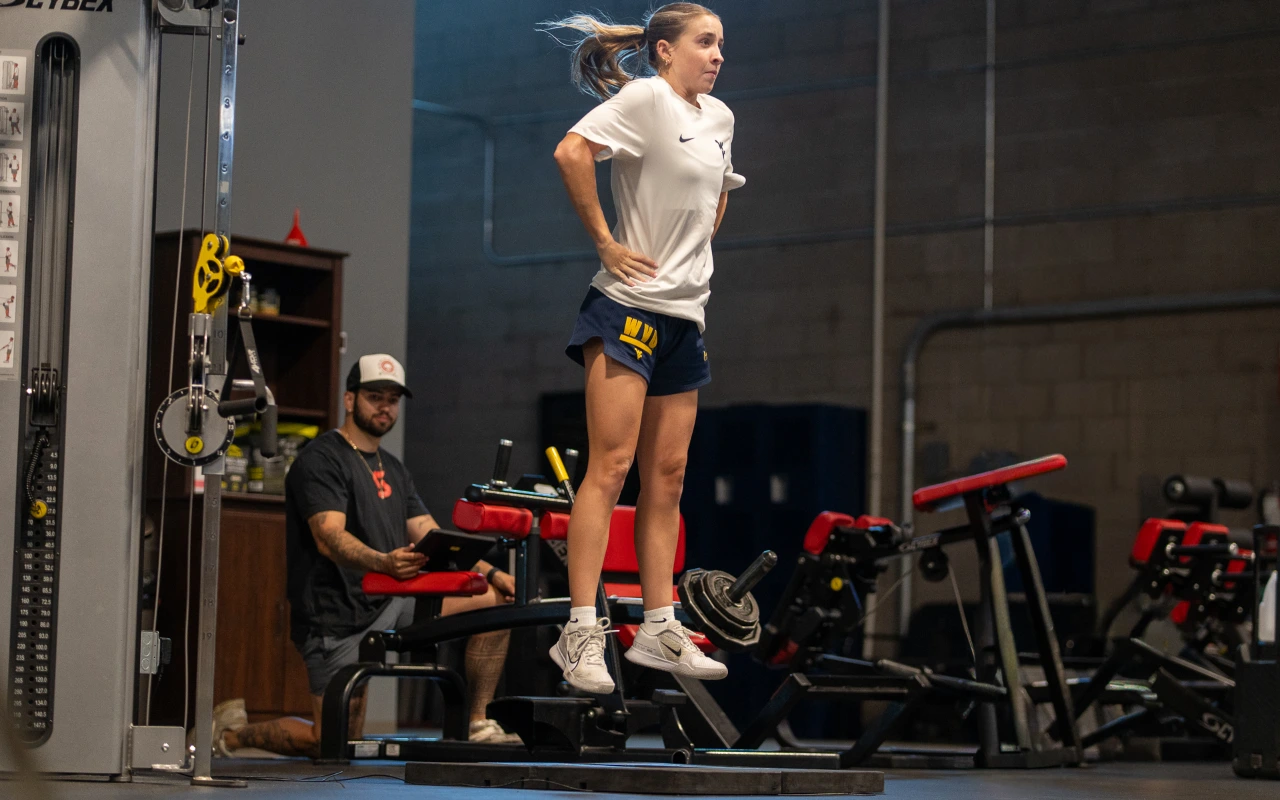
The two moments where this matters most are the start off the blocks and the push off the wall during a turn. Because of water displacement, both of those actions happen from an already loaded position. There’s no counter-movement the way you’d see in a jump on land. So, we train our swimmers specifically for that. A lot of plyometrics, a lot of Olympic lifting, and a lot of work that builds explosive power from positions that mimic what they’re doing in the water.
We also use sleds. Sleds are great because they force athletes to push against resistance, which is essentially what they’re doing every single stroke in the water. If they can produce power against a sled, they can produce it in the pool.
Anti-Rotation: The Training Most Swimmers Have Never Heard Of
Because swimming demands so much rotation, one of the most important things we do in the weight room is the opposite: we train swimmers to resist rotation.
Anti-rotation training builds trunk stiffness and core stability. Think exercises like a Pallof press holds, where the athlete has to keep their core locked and tight while fighting against a lateral pull. The goal is to make sure that all the energy a swimmer is generating actually propels them forward, rather than being lost through excess movement in the water. It also helps protect the spine and keeps athletes healthier over a long season of high-volume training.
Two Things I Want Every Swimmer (and Their Parents) to Know
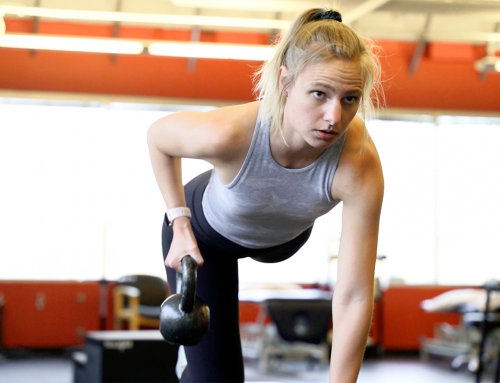
1. Swimmers need to be strong and powerful. Not yoga-strong, not Pilates-strong. Actually strong and powerful. High rep, low weight training is not the path to a faster swim time. Olympic lifting, plyometrics, and power-based movements are. A swimmer who is proficient in those areas will consistently outperform one who isn’t, everything else being equal.
2. Treat the weight room the same way you treat the pool. The swimmers I’ve seen make the biggest jumps are the ones who buy into both. The weight room isn’t a chore or an add-on. It’s another training environment where the work you put in directly shows up in the water.
And for parents who are worried that adding strength training on top of swim practice is too much: it’s not. Done properly, it makes swimmers more resilient, not less. It’s part of how they stay healthy long enough to compete at higher levels.
Interested in Training This Summer?
We have a swim-specific strength and conditioning group forming for this summer at the Spooner Sports Institute, training three days a week. It’s open to elite high school and college-level swimmers. Spots are filling up, so if you want in, reach out now!
To the swimmers who have already been grinding with me since middle school: you know the deal. For everyone else, the door is open.
To learn more about the summer sports performance programs Ernie is offering at the Spooner Sports Institute, visit Summer At The Institute