By Payson Staats, FIT Trainer
What’s better than training with a pro who knows wrestling, not just from books, but from stepping onto the mat and knowing the work firsthand? Payson Staats wrestled the majority of his life, pushing through tough practices and training. Now, as a Performance and Personal Trainer at Spooner, he combines that real wrestling experience with expert training to help wrestlers move better, build strength, and stay mentally tough. Here, Payson shares five must-know tips every wrestler can use to up their game both on and off the mat.
What’s one strength or conditioning habit that separates serious wrestlers from others, and how can they build it?
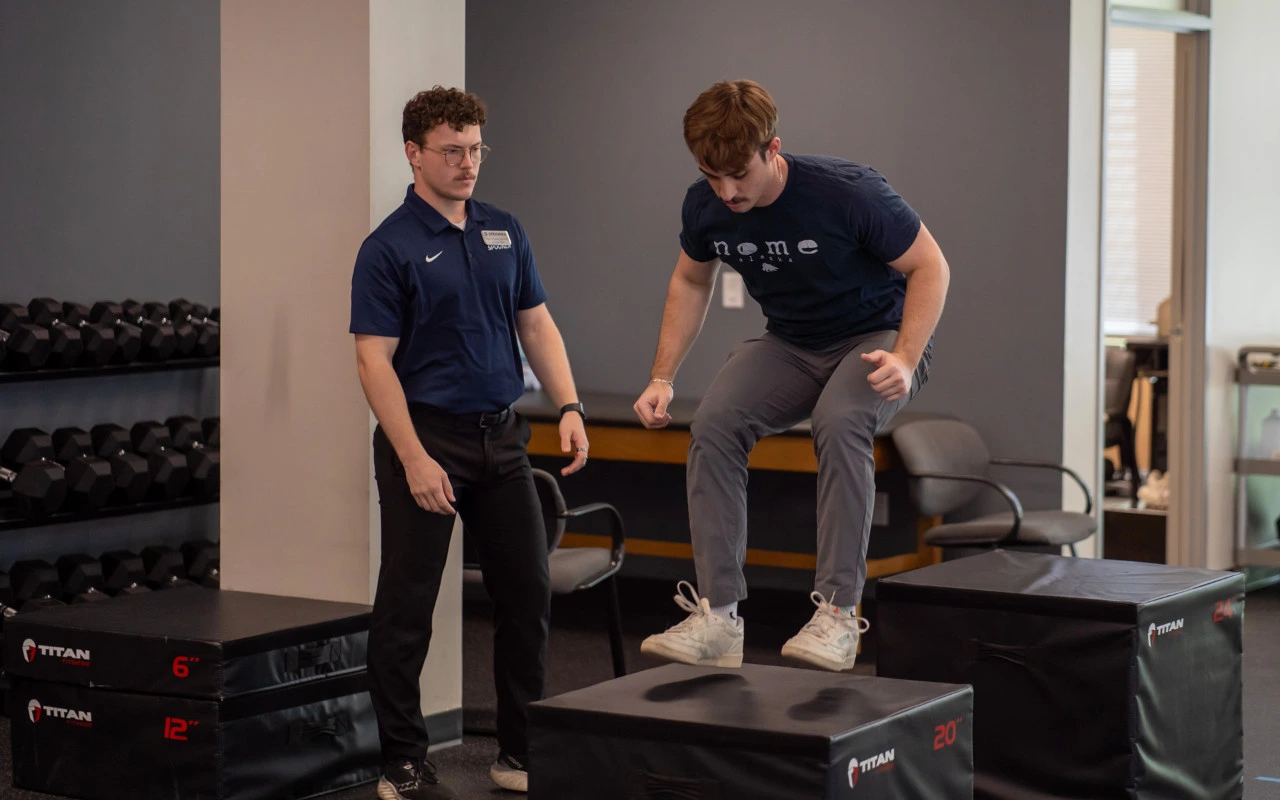
Wrestling is explosive. You have to be strong and quick, so incorporating plyometrics into your training is going to be really important. If you’re just lifting heavy and lifting slow, that won’t translate into the quick movements that you’re going to need in a match.
When it comes to recovery, what’s a tip that most wrestlers overlook?
Proper rest and nutrition. Cutting weight is a very real aspect of wrestling, and it is a problem that wrestlers do it unsafely. So, making sure that you’re losing weight properly and doing it well before season or when you still have time is so important. Then going forward, making good decisions to make sure that you’re keeping that weight and you’re not fluctuating is also crucial.
Is there a mobility or flexibility move that you consider a secret weapon for wrestlers?
Flexibility and mobility are really important in wrestling. One quote I’ve always liked is: “If you can’t control your own body, how can you control someone else’s?”
My former wrestling coach actually had a background in gymnastics, so he incorporated a lot of those movements into our training. We’d do some gymnastics-based drills, especially in our warmups.
A solid routine would include dynamic stretching before practice, adding in gymnastics-style movements to promote flexibility and body control, and then ending with static stretching to maintain mobility during the season.
What’s one mindset shift you try to instill in athletes?
The mental side of performance is something I overlooked when I was wrestling. At the time, I didn’t realize how important it was—and I really wish someone had helped coach me through the psychological side of the sport. It absolutely would’ve changed the way I approached competition.
It’s a big topic , but a few lessons really stand out to me now:
- Learn to separate your self-worth from your performance. Losing a match doesn’t mean you’re a failure or a bad person, and it’s definitely not the end of the world.
- Be proud of your own progress. When you focus on how far you’ve come, the experience becomes a lot more rewarding, and more enjoyable.
- Find ways to make the sport fun again. When every match starts to feel like a test of your worth, the pressure becomes overwhelming. It doesn’t have to be that way.
- Believe that you can succeed. You can go out there and win matches, score points, and dominate.
So if a wrestler asks you what one thing they could do in the off-season to prepare for the season, what would you tell them they should be doing?
The more time you spend on the mat, the more technique you practice, the better you’ll be.
I saw the most growth between my sophomore and junior year. That summer, I went to a wrestling camp and stayed active in the practice room during our off-season workouts. That’s when things really started to shift for me. I went from being strictly JV to seriously pushing for a varsity spot. That’s where I saw my most growth was between my sophomore and junior year because of that extra time I put in on the mat in the off-season.
What is one final piece of advice for young wrestlers you’d like to impart?
Wrestling taught me a lot about winning but also losing. It taught me I can do hard things, and built my self-confidence, too. It’s just you and one other person out there, so you have to show up. If I could go back in time, I wish I had spent more time working in the off-season working with professionals to train smarter. I also wish I would have addressed the mental and psychological aspects of the sport that challenged me. So, I think if someone addresses those earlier on, they are setting themselves up for long term success in the future.
Want to level up your strength, explosiveness, and agility to perform better on the mat? Call 480-551-4960 to work with a Spooner FIT Trainer and achieve your goals!