By Madison Parks, PT, DPT, OCS
Going back to work while you’re still healing from breast cancer is hard. You’re expected to jump back into meetings, keep up with responsibilities, and act like you’re back to normal when you’re anything but. That’s why rehab during this time has to be specific. Every body, every surgery, every job is different. We treat people, not protocols.
There Is Not A One-Size-Fits In Recovery!
When returning back to work, the most important thing to remember is that breast cancer oncology rehabilitation is different for everyone.
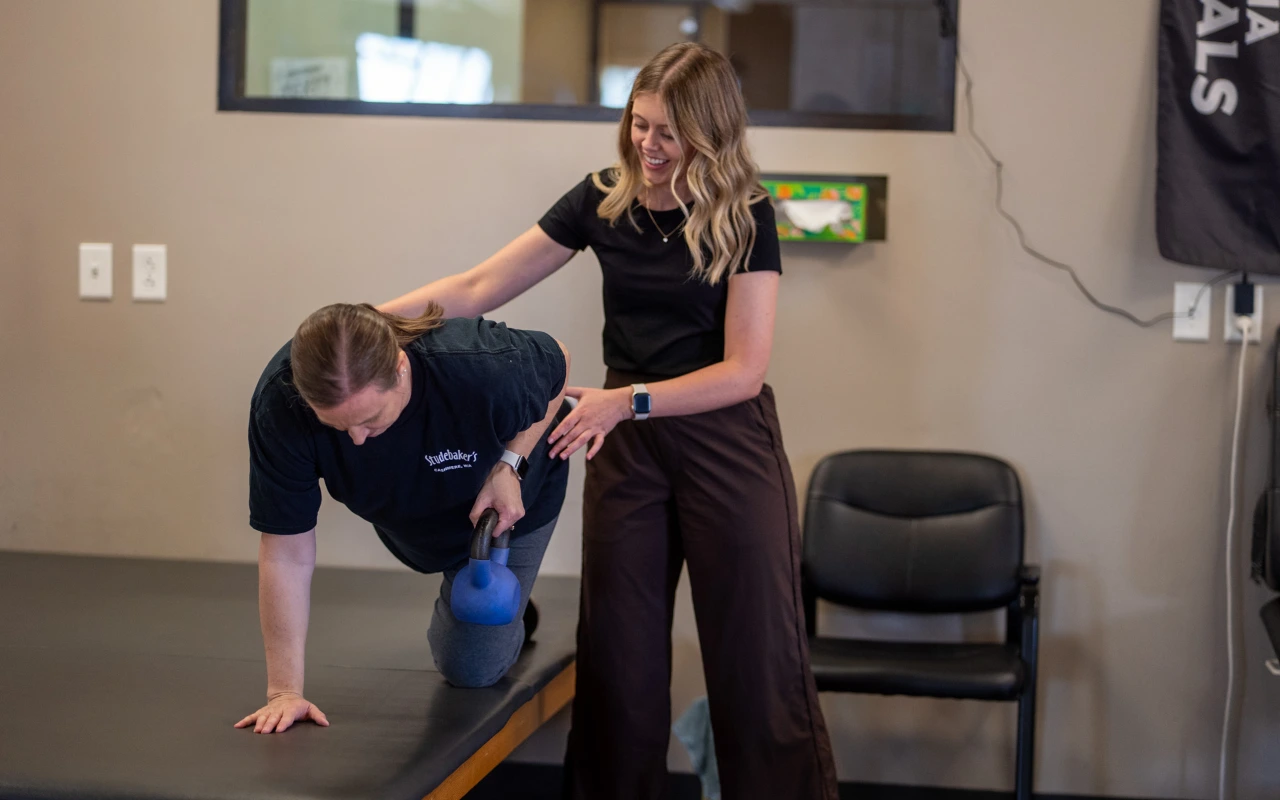
The most common surgery I help treat after right now is the DIEP flap reconstruction. That involves a large abdominal incision, hip to hip, and uses tissue from the abdomen to reconstruct the breasts after a double mastectomy. It takes time to move again without discomfort. We spend a lot of time early on re-learning how to breathe, sit up in bed, and activate the core in a way that feels safe.
Other people may have flat closures or implants. Some have a combination. Even if two people have the exact same surgery, they’ll recover in different ways. It depends on their anatomy, how they heal, and what kind of demands they’re trying to return to.
What We Focus on in the First Six Weeks
Most patients start physical therapy around three weeks after surgery. Early sessions focus on scar mobility, shoulder range of motion, and learning how to engage the core without pain. These basics matter, especially when just getting in and out of bed feels like a challenge. Before we think about job duties, we work on daily movements that need to feel safe again.
Do You Have A Desk Job or Active Job?
It Matters, So Let Your Therapist Know!
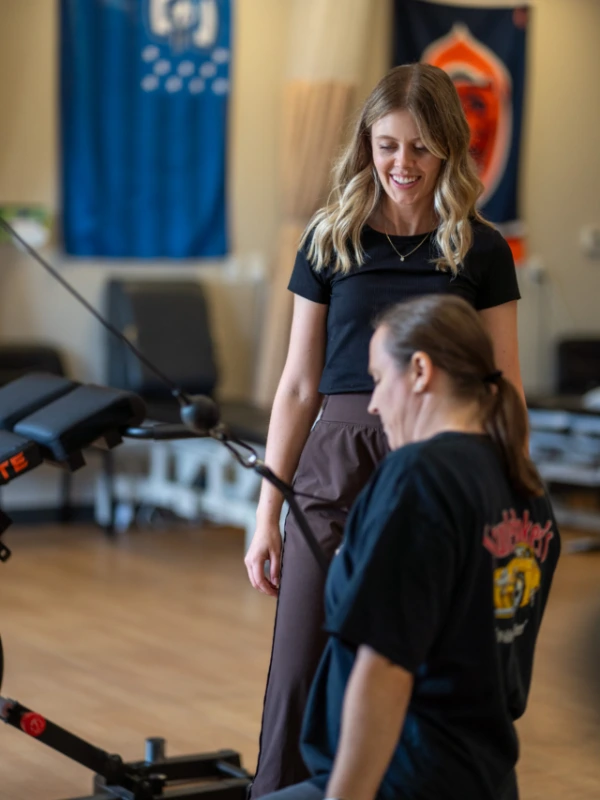
After that early healing stage, what we work on starts to shift based on what kind of job someone is returning to. For a desk job, we focus on posture, trunk mobility, and strategies to break up long periods of sitting. We talk about moving throughout the day, even in small ways.
For more active roles, the focus changes. One of my patients, a nurse, needed to be able to do chest compressions and patient transfers again. That’s not a small task when you are still recovering. We created a program that addressed her specific needs and trained her at a level beyond what would be required on the job. That way, when she got there, she didn’t have to wonder if she could handle it. She knew she could.
Fatigue Hits Differently
Some patients are still in treatment while trying to return to work. Chemo and radiation drain energy in ways that are hard to predict. One day you might feel okay, and the next day you can barely make it through the morning. That kind of exhaustion doesn’t always follow a pattern, and it doesn’t always make sense to the people around you.
We talk about how to manage it: working in shorter intervals, planning recovery breaks, and adjusting expectations as needed. Sometimes it means pausing during a task or skipping one altogether. It helps when employers understand that this isn’t about whether you are motivated to work. Most patients are excited to get back to work and activities, but regardless of this, your body needs the space and flexibility to heal in the ways it needs since it has changed since you were last at work.
We Build Your Plan Together
There’s no set return-to-work protocol for breast cancer rehab. People are going back to everything from office jobs to manual labor to full-time caregiving. The symptoms people experience, even from the same surgery, are so different that no single guide can cover it.
What we do have is a roadmap that works for all and can be adapted to fit your needs: build mobility, restore movement, start core strength, then work toward whatever tasks are coming next.
What Patients Should Know
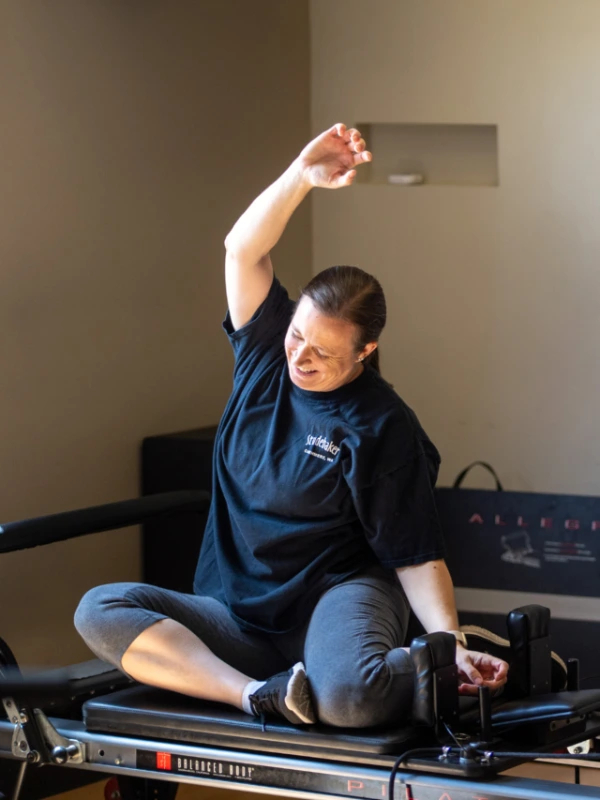
Most of the people I work with are returning to work while still holding everything else together. They’re managing households, supporting their families, juggling treatment schedules. And through all of that, they’re trying to show up for their job too.
Here’s what I want them to remember:
- Communicate clearly with your therapist and your employer.
- Take breaks BEFORE you need them.
- If something feels off, say so. We can adjust.
- There’s no prize for pretending you’re further along than you are. Be gentle with yourself in both mind and body.
- Some weeks will feel strong. Others won’t. Both are normal.
Don’t rush your way through recovery just to meet other people’s expectations. This process is full of unknowns. What worked one day might not the next. That’s not failure. It’s just learning to listen to your body’s needs and giving yourself grace!
We will be there for every step of your recovery so that you can get back to the parts of life you loved.
Schedule an appointment with a breast cancer oncology rehab physical or occupational therapist today!